
Showing posts with label human rights. Show all posts
Showing posts with label human rights. Show all posts
Tuesday, February 11, 2014
The Challenges of Running Responsible Supply Chains
NYT blog post by Laura D'Andrea Tyson discussing some of the leading initiatives and challenges for the promotion of labour and health and safety standards through supply chains. Of particular interest to those grappling with the application of the Guiding Principles on Business and Human Rights in the supply chain context.


Tuesday, September 10, 2013
Corporate liability for human rights violations in Canada?
 Can a Canadian parent company with a subsidiary operating in a foreign jurisdiction be liable for human rights
violations in the foreign jurisdiction that occur at the level of the subsidiary? Janne Duncan, Michael Torrance and Janet Howard discuss a recent decision in which a Canadian court has
allowed this issue to proceed to trial. Whatever the outcome at trial where issues of liability will ultimately be determined, one thing is clear: international public expectations are changing, and directors and officers of Canadian companies need to be aware of the potential risk of claims by foreign plaintiffs seeking redress for alleged harm committed beyond Canada’s borders.
Can a Canadian parent company with a subsidiary operating in a foreign jurisdiction be liable for human rights
violations in the foreign jurisdiction that occur at the level of the subsidiary? Janne Duncan, Michael Torrance and Janet Howard discuss a recent decision in which a Canadian court has
allowed this issue to proceed to trial. Whatever the outcome at trial where issues of liability will ultimately be determined, one thing is clear: international public expectations are changing, and directors and officers of Canadian companies need to be aware of the potential risk of claims by foreign plaintiffs seeking redress for alleged harm committed beyond Canada’s borders. Friday, August 16, 2013
Increased Risks of Liability for International Human Rights Claims Brought in Canada
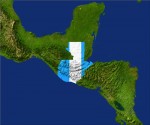
 On July 22, 2013, the Ontario Superior Court of Justice in Choc v. Hudbay Minerals Inc. 2013 ONSC 1414 (the “Hudbay Decision”) dismissed a preliminary motion of the Defendants, Canadian mining company, Hudbay Minerals (Hudbay), thereby allowing the lawsuit against the company to proceed. The claim, which is yet to be proven, alleges Hudbay is responsible for human rights abuses allegedly committed by mine security personnel at Hudbay’s wholly owned and controlled subsidiary, Compania Guatemala de Niquel (CGN), in eastern Guatemala.
As noted, the matter has yet to proceed to trial and none of the allegations raised have yet been proven. That being so, this case has important implications for Canadian businesses operating abroad. In essence, the finding means that a complaint
Thursday, August 15, 2013
Business and Human Rights: The State of Play
Ruth Cowley, Jon Hari and Stuart Neely discuss the "state of play" of business and human rights.
Wednesday, July 10, 2013
Human Rights Due Diligence in International Finance
 Revisions to the Equator Principles (EP) have created new requirements for businesses to conduct human rights due diligence in order to qualify for financing from 79 of the world’s largest financial institutions. The EP apply globally to all project financing with a value of over $10 million and to certain types of corporate loans, bridge loans and project finance advisory services. This development brings the importance of human rights due diligence beyond reputational risk management and ties it directly to access to capital for many companies. It also significantly increases the significance of human rights considerations for the financial industry.
Thursday, June 27, 2013
U.S. to Suspend Trade Privileges With Bangladesh Over Labour Safety Standards
 The NYT reports that the Obama administration on Thursday will suspend trade privileges for Bangladesh over concerns about safety problems and labor rights violations in that country’s garment industry, according to administration and Congressional officials. This follows a factory building collapse there in April, killing 1,129 workers, and a factory fire killing 112 workers last November. See full article here.
Thursday, May 23, 2013
New York Times: U.S. Retailers See Big Risk in Safety Plan for Factories in Bangladesh
 The New York Times reports that American retailers remain sharply opposed to joining an international
plan to improve safety conditions at garment factories in Bangladesh as
their European counterparts and consumer and labor groups dismiss the
companies’ concerns about legal liability. Full article here.
The New York Times reports that American retailers remain sharply opposed to joining an international
plan to improve safety conditions at garment factories in Bangladesh as
their European counterparts and consumer and labor groups dismiss the
companies’ concerns about legal liability. Full article here.Sunday, May 5, 2013
Anna Kirkpatrick: Kiobel v Shell - What the decision says and what it left out
Anna Kirkpatrick of Norton Rose in London England discusses the recent US Supreme Court decision in Kiobel v. Shell, and the implications of the decision for business and human rights expectations and litigation in the United States.
 This decision is particularly of interest for Equator Principles (EP) financings in light of the human rights due diligence requirements of the new IFC Performance Standards on Environmental and Social Sustainability, incorporated by reference into the EP.
Read on for Anna's discussion of what the decision says and what remains to be determined in US law.
Read on for Anna's discussion of what the decision says and what remains to be determined in US law.
Saturday, April 27, 2013
Human Rights Due Diligence and the Equator Principles
The 2012 IFC Performance Standards (as referred to in the Equator Principles) states that in “limited high risk circumstances” it may be appropriate for the Client to complement its environmental and social risks and impacts identification process with specific human rights due diligence. This article will describe these requirements which have significance for the Equator Principles.
Wednesday, April 17, 2013
Addressing Substantial Legal Restrictions on Freedom of Association in Equator Principles Projects
Freedom of Association may be substantially restricted by law in some countries. This reality creates complex challenges for Equator Principles (EP) implementation, since the requirements of the Equator Principles require compliance with host country laws and in some cases addressing the overlapping and interrelating requirements of the IFC Performance Standards on Environmental & Social Sustainability (IFC Performance Standards).
As we discuss in this article, the IFC Performance Standards establish standards for the protection of Freedom of Association rights, even in circumstances where the law substantially interferes with those rights.
As we discuss in this article, the IFC Performance Standards establish standards for the protection of Freedom of Association rights, even in circumstances where the law substantially interferes with those rights.
Monday, March 11, 2013
World Bank Compliance Advisor Ombudsman 2012 Annual Report

Wednesday, February 6, 2013
Understanding "Consent" in Free Prior and Informed Consent (FPIC) of Indigenous Peoples - Implications for the IFC Performance Standards and Equator Principles
This article considers the meaning of "consent" in Free Prior and Informed Consent (FPIC) applied to an Equator Principles governed project where the IFC Performance Standards on Environmental and Social Sustainability (the Performance Standards) apply. The contents are derived from a chapter by Pierre-Christian Labeau in the book IFC Performance Standards on Environmental and Social Sustainability: A Guidebook.
Subscribe to:
Posts (Atom)