A renewed CSR strategy for the Canadian mining sector was announced by the Government of Canada on November 14, 2014 that will create consequences for companies who refuse to adhere to endorsed CSR best practices and dispute resolution processes. See Canadian Mining Journal.

Showing posts with label IFC Performance Standards. Show all posts
Showing posts with label IFC Performance Standards. Show all posts
Tuesday, January 6, 2015


Tuesday, September 10, 2013
Corporate liability for human rights violations in Canada?
 Can a Canadian parent company with a subsidiary operating in a foreign jurisdiction be liable for human rights
violations in the foreign jurisdiction that occur at the level of the subsidiary? Janne Duncan, Michael Torrance and Janet Howard discuss a recent decision in which a Canadian court has
allowed this issue to proceed to trial. Whatever the outcome at trial where issues of liability will ultimately be determined, one thing is clear: international public expectations are changing, and directors and officers of Canadian companies need to be aware of the potential risk of claims by foreign plaintiffs seeking redress for alleged harm committed beyond Canada’s borders.
Can a Canadian parent company with a subsidiary operating in a foreign jurisdiction be liable for human rights
violations in the foreign jurisdiction that occur at the level of the subsidiary? Janne Duncan, Michael Torrance and Janet Howard discuss a recent decision in which a Canadian court has
allowed this issue to proceed to trial. Whatever the outcome at trial where issues of liability will ultimately be determined, one thing is clear: international public expectations are changing, and directors and officers of Canadian companies need to be aware of the potential risk of claims by foreign plaintiffs seeking redress for alleged harm committed beyond Canada’s borders. Wednesday, September 4, 2013
Export-Import Bank Sued by Environmental Groups for Coal Export Loan Guarantee
 Columbia Law School's Climate Law Blog discusses a recent lawsuit by the NGO Earthjustice against US Ex-Im, regarding the Defendant's alleged failure to conduct an environmental assessment for a coal production related loan.
Friday, August 16, 2013
Increased Risks of Liability for International Human Rights Claims Brought in Canada
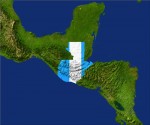
 On July 22, 2013, the Ontario Superior Court of Justice in Choc v. Hudbay Minerals Inc. 2013 ONSC 1414 (the “Hudbay Decision”) dismissed a preliminary motion of the Defendants, Canadian mining company, Hudbay Minerals (Hudbay), thereby allowing the lawsuit against the company to proceed. The claim, which is yet to be proven, alleges Hudbay is responsible for human rights abuses allegedly committed by mine security personnel at Hudbay’s wholly owned and controlled subsidiary, Compania Guatemala de Niquel (CGN), in eastern Guatemala.
As noted, the matter has yet to proceed to trial and none of the allegations raised have yet been proven. That being so, this case has important implications for Canadian businesses operating abroad. In essence, the finding means that a complaint
Monday, July 29, 2013
New Sustainability Rules Requiring Legal Strategy Rethink
 This article considers the legal implications of new rules of the recently revised Equator Principles (EP), whose third iteration (“EP III”) took effect on May 14th, 2013. The Equator Principles is a framework agreed upon by 79 global financial institutions to identify, assess and manage environmental and social risk in certain types of financings around the world. The goal is to provide an overview of the EP III with discussion of steps that counsel to EP Financial Institutions (EPFI) might consider to minimize potential legal risks and update contractual documentation.
Thursday, May 30, 2013
Managing Lender Liability in Equator Principles Implementation - Regulatory Offences
 The Equator Principles III ("EP III") states that: "As financiers and advisors, we work in partnership with our clients to identify, assess, and manage environmental and social risks and impacts in a structured way, on an ongoing basis." It is well known that lender liability for environmental and social matters may arise from operational or managerial control by a lender over a project, or where a lender aids and abets regulatory offences of their borrowers. This article considers the risks associated with regulatory prosecutions of an Equator Principles Financial Institution (EPFI), acting as auditors and possibly co-managers of environmental and social risk management of their borrowers. We also consider management strategies, including the role of legal professional privilege. This article is part three of a three part look at managing lender liability in EP implementation. The first article looked at post-loan legacy liabilities, and the second at third party beneficiary rights in the EP context.
Wednesday, May 29, 2013
Managing Lender Liability in Equator Principles Implementation - Third Party Beneficiary Rights in Contract Law
 I read an interesting and provocative journal article by Marissa Marco, published in the Fordham International Law Journal in 2011, entitled "Accountability in International Project Finance: The Equator Principles and the Creation of Third-Party Beneficiary Status for Project-Affected Communities". The article discusses the law on third party beneficiary rights under US contract law and considers whether the provisions of the Equator Principles (EP) relating to Affected Communities might create enforceable rights for those communities under those principles.
This article will discuss this issue and suggest a risk management strategy for EP Financial Institutions (EPFI - i.e. EP signatories) addressing and managing such risks in Equator Principles implementation.
Managing Lender Liability in Equator Principles Implementation - Legacy Liabilities (Post-Loan following Repayment or Default)
 This post will consider a rather controversial topic - the possible existence of liabilities linked to Equator Principles (EP) implementation that may extend beyond the life of the underlying loan or activity to which the EP were originally applied.
The purpose will be to consider whether there are plausible legacy liability risks affecting EP implementation and, if so, how such risks could be managed by Equator Principles Financial Institutions (EPFI) before they materialize.
Please note that, as this is a blog post, the analysis is high level and intended to raise points for reflection and thought rather than to be an exhaustive review of the law on these subjects. Hopefully it raises some useful considerations and I am very much open to comment (and criticism) of the topic and ideas put forward. The goal is to generate a dialogue that may help push the boundaries of our understanding of these issues.
Thursday, May 16, 2013
Final Equator Principles III and the August 2012 Draft - What are the differences?
Some of the main differences are:
1. Elimination of the High Income OECD threshold for application of the IFC Performance Standards in the final version. Now there is a concept of "Designated Countries" which basically has the same effect but is not based on high income status;
2. Only a summary of an ESIA rather than full disclosure of the ESIA and ESMP is required in the final version;
3. In the final version only a "majority" of a corporate loan meeting the appropriate thresholds must be tied to a project, that caveat wasn't in the draft;
4. New emphasis in principle 3 that compliance with relevant host country laws, regulations and permits are to be address "in the first instance" in Assessments;
5. Some changes to Appendix B setting out EPFI reporting requirements;
6. More specific reference to the Guiding Principles on Business and Human Rights due diligence requirement.
1. Elimination of the High Income OECD threshold for application of the IFC Performance Standards in the final version. Now there is a concept of "Designated Countries" which basically has the same effect but is not based on high income status;
2. Only a summary of an ESIA rather than full disclosure of the ESIA and ESMP is required in the final version;
3. In the final version only a "majority" of a corporate loan meeting the appropriate thresholds must be tied to a project, that caveat wasn't in the draft;
4. New emphasis in principle 3 that compliance with relevant host country laws, regulations and permits are to be address "in the first instance" in Assessments;
5. Some changes to Appendix B setting out EPFI reporting requirements;
6. More specific reference to the Guiding Principles on Business and Human Rights due diligence requirement.
Update: Equator Principles III is approved and launched - new trends and a strategy rethink
 The Equator Principles (EP) is an agreement amongst 76 global financial institutions (known as EP Financial Institutions or "EPFI") to apply environmental and social standards to certain investment decisions. The third iteration of the EP (EP III) was released on May 14, 2013 and will take effect (with certain transition allowances) on June 4, 2013.
The release of EP III follows a major revision of the IFC Performance Standards on Environmental & Social Sustainability in 2012 (IFC Performance Standards), a set of guidelines that is incorporated by reference into the EP framework. Together, these changes mark an important evolution in best practice in environmental and social risk management of particular importance for both bankers and those seeking access to capital.
This article reviews the new ground rules of environmental and social risk management and considers some new trends that may begin to emerge. We also consider what risks and opportunities arise from these developments that should be considered by both financiers and those seeking finance who must comply with these frameworks to meet their business goals.
Sunday, May 5, 2013
Anna Kirkpatrick: Kiobel v Shell - What the decision says and what it left out
Anna Kirkpatrick of Norton Rose in London England discusses the recent US Supreme Court decision in Kiobel v. Shell, and the implications of the decision for business and human rights expectations and litigation in the United States.
 This decision is particularly of interest for Equator Principles (EP) financings in light of the human rights due diligence requirements of the new IFC Performance Standards on Environmental and Social Sustainability, incorporated by reference into the EP.
Read on for Anna's discussion of what the decision says and what remains to be determined in US law.

Read on for Anna's discussion of what the decision says and what remains to be determined in US law.
Saturday, April 27, 2013
Human Rights Due Diligence and the Equator Principles
The 2012 IFC Performance Standards (as referred to in the Equator Principles) states that in “limited high risk circumstances” it may be appropriate for the Client to complement its environmental and social risks and impacts identification process with specific human rights due diligence. This article will describe these requirements which have significance for the Equator Principles.
Wednesday, April 17, 2013
Addressing Substantial Legal Restrictions on Freedom of Association in Equator Principles Projects
Freedom of Association may be substantially restricted by law in some countries. This reality creates complex challenges for Equator Principles (EP) implementation, since the requirements of the Equator Principles require compliance with host country laws and in some cases addressing the overlapping and interrelating requirements of the IFC Performance Standards on Environmental & Social Sustainability (IFC Performance Standards).
As we discuss in this article, the IFC Performance Standards establish standards for the protection of Freedom of Association rights, even in circumstances where the law substantially interferes with those rights.
As we discuss in this article, the IFC Performance Standards establish standards for the protection of Freedom of Association rights, even in circumstances where the law substantially interferes with those rights.
Sunday, April 14, 2013
Climate Conversations - Norway’s government pension fund divests from palm oil producers
 Norway’s government pension fund – one of the world’s largest – has withdrawn US$314 million in investments from a string of companies that it says produce palm oil “unsustainably”.
 As AlertNet reports, in March, the Norwegian Government Pension Fund Global released its 2012 Annual Report announcing that it had sold its stakes in 23 of the world’s largest palm oil companies, reducing its investments in the Indonesian and Malaysian palm oil industry by more than 40 percent.
Thursday, April 11, 2013
Listed Magazine: "Shifting The Equator" by Sandra Odendahl
 Sandra Odendahl, director of corporate sustainability at RBC writes in Listed Magazine that Equator Principles banks use to assess the social and environmental impact of major resource-based projects they finance might soon look very, very different.
 Article Note, these views are Sandra's own, not necessarily those of RBC.
Thursday, April 4, 2013
Keewatin v Ontario: Court of Appeal affirms Ontario’s unilateral ability to take up treaty lands
 Jocelyn Kearney of Norton Rose, one of the authors of IFC Performance Standards on Environmental and Social Sustainability: A Guidebook, writes about a recent key decision of the Ontario Court of Appeal that will have implications for the understanding of indigenous rights and the duty to consult in Canada.
This development should be of interest to Equator Principles banks grappling with the meaning of Free Prior and Informed Consent, which is now part of the IFC Performance Standards requirements, which must be interpreted with consideration to the well developed legal concepts from which its meaning derives.
Jocelyn Kearney of Norton Rose, one of the authors of IFC Performance Standards on Environmental and Social Sustainability: A Guidebook, writes about a recent key decision of the Ontario Court of Appeal that will have implications for the understanding of indigenous rights and the duty to consult in Canada.
This development should be of interest to Equator Principles banks grappling with the meaning of Free Prior and Informed Consent, which is now part of the IFC Performance Standards requirements, which must be interpreted with consideration to the well developed legal concepts from which its meaning derives.Saturday, March 30, 2013
International Financial Law Review: The Sustainability Case Under the Equator Principles
 The third iteration of the Equator Principles (EP) framework will be released in the first quarter of 2013. Like its predecessors, the revised framework will have substantial implications for billions of dollars in international financings. It will also reinforce the importance of environmental and social reviews in addressing legal and reputational risks facing Equator Principles Financial Institutions (EPFI).
It makes it timely to reconsider the critical role legal counsel have in EP implementation. This article examines the "sustainbility case" approach to Equator Principles implementation and the role of legal and regulatory oversight of that process.
See article link HERE
The third iteration of the Equator Principles (EP) framework will be released in the first quarter of 2013. Like its predecessors, the revised framework will have substantial implications for billions of dollars in international financings. It will also reinforce the importance of environmental and social reviews in addressing legal and reputational risks facing Equator Principles Financial Institutions (EPFI).
It makes it timely to reconsider the critical role legal counsel have in EP implementation. This article examines the "sustainbility case" approach to Equator Principles implementation and the role of legal and regulatory oversight of that process.
See article link HERE Sunday, March 17, 2013
What's the Goal of the Equator Principles: Managing Credit Risk or Regulating "Do No Harm"? The World Bank CAO Opines
 The World Bank's Compliance Advisor Ombudsman (CAO) completed a Compliance Audit of IFC's Financial Sector Investments, releasing a report on October 10, 2012 (CAO Audit). The CAO Audited a Sample of IFC Investments in Third-Party Financial Intermediaries. One critique of the IFC's own approach to implementation of the IFC Performance Standards on Environmental and Social Sustainability (IFC Performance Standards) was the application by the IFC of two potentially contradictory aims in its environmental and social diligence: "Do No Harm" and "Credit Risk". The same contradictory aims affect the application of the Equator Principles (EP) by EP Financial Institutions (EPFI).
 This article argues that for the sake of clarity and effectiveness, the regulatory nature of the EP and IFC Performance Standards must be fully recognized and permeate the EP implementation process, while credit risk objectives should be considered quite secondary to the real dynamic of EP implementation as a private regulatory process.
Alberta Oil Magazine: Bay Street could be where the next battle over the oil sands is waged
 Statoil's Manager of Environment and Climate, Dan Zilnik writes in Alberta Oil magazine: "...the bulk of investment in the oil sands will likely come from large
publicly traded companies who can secure the massive financing necessary
to make significant oil sands investment. Many of these companies take
on debt to finance their activities. It is of little surprise that
through their funding of debt, three of the “Big Five” Canadian banks
are the largest investors in the oil sands."
Statoil's Manager of Environment and Climate, Dan Zilnik writes in Alberta Oil magazine: "...the bulk of investment in the oil sands will likely come from large
publicly traded companies who can secure the massive financing necessary
to make significant oil sands investment. Many of these companies take
on debt to finance their activities. It is of little surprise that
through their funding of debt, three of the “Big Five” Canadian banks
are the largest investors in the oil sands."The article goes on to say:
"...Advocacy organizations have long recognized the importance of the financial sector in the development of megaprojects which they oppose, traditionally mines and dams. These same organizations have set their sights on the oil sands, which means engaging the Big Five.
The Rainforest Action Network has done extensive advocacy with Canada’s banks, including commissioning reports on the environmental and economic impacts on investing in renewables versus oil sands.
Just as importantly, financial institutions have begun considering the environmental and social impacts of their investments. All of the Big Five have signed onto the Equator Principles, a credit risk framework for managing environmental and social risk in project finance transactions. All of the Big Five report their carbon emissions and have stated ambitions to reduce their greenhouse gases.
As the context for oil sands investment evolves, expect the road to northern Alberta to start on Bay Street. Expect Canada’s Big Five to continue strengthening their understanding of the environmental and social implications of their investments. The oil sands debate has been fraught with mine truck moments, and don’t be surprised if the next one happens on Bay Street."
Monday, March 11, 2013
CAO Compliance Audit of IFC's Financial Sector Investments
On February 5, 2013, the World Bank Compliance Advisor Ombudsman (CAO) released its audit of IFC's financial sector investments, together with IFC's official response. - The CAO Audit of a Sample of IFC Investments in Third-Party Financial Intermediaries, October 10, 2012 can be found here.
- The IFC's Response to the Report on Audit of a Sample of IFC Investments in Third-Party Financial Intermediaries, January 31, 2013 can be found here.
- The CAO Appraisal of IFC's Investment Projects in the Financial Sector, June 27, 2011 report can be found here.
I will discuss these findings along with the IFC's approach to environmental and social risk management in Financial Intermediary relationships in future posts. Read on for the summary of the report...
Subscribe to:
Posts (Atom)